How-to
Needle Felting With Cat or Dog Hair: What Works and What Does Not
Published
As an Amazon Associate we earn from qualifying purchases. This does not change our picks. Affiliate disclosure
New to Prime? Try Prime free for fast, free shipping on eligible items.
Short answer
Yes, with limits. The soft undercoat brushed from cats and from double-coated dogs needle felts. Short, slippery coats do not hold on their own and need wool to grip them. The reliable method is a firm wool core with the fur felted on as a thin layer, pure or blended with wool, using a size 38 or 40 needle. Test a small tuft first.
Gear for this job
All 7 picks comparedDesert Breeze Corriedale core wool, 8 oz
See price on AmazonSee it on AmazonRevolution Fibers Corriedale roving, undyed, 1 lb
See price on AmazonSee it on AmazonWoolbuddy Corriedale core wool, white, 1 lb
See price on AmazonSee it on Amazon
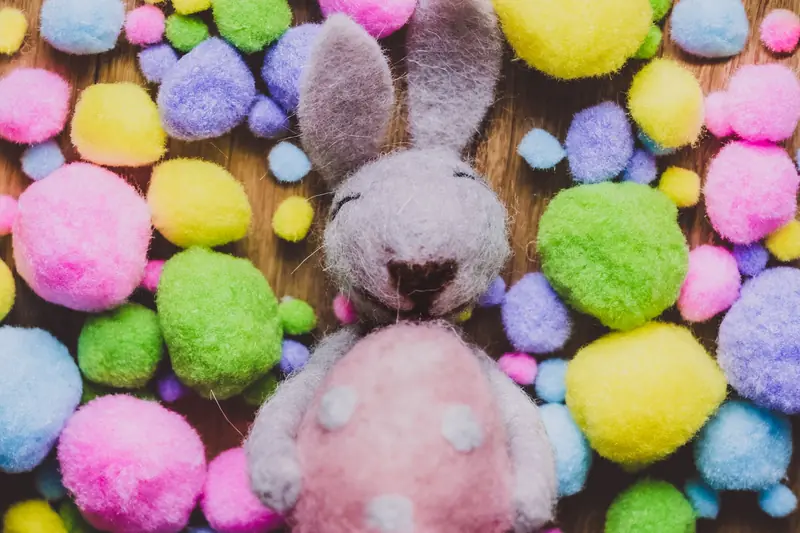
This page is for someone with a bag of brushed-out fur who wants to turn it into a keepsake. Whether that works depends on the coat far more than on technique: fluffy undercoat tangles and locks, short slippery hair slides back out. Fur is also a limited supply, sometimes one that cannot be replaced, so the method here uses it only where it shows and lets ordinary wool do the structural work. No blend ratio is given, because none could be verified. A test tuft tells you more than a number would.
Can you needle felt with cat hair or dog hair?
Both can be felted, and the coat type decides how. The table follows one maker's published answer on pet fur. Breeds stand for a coat type, not a ranking, and two animals of one breed can differ.
The reason is the way needle felting works. Barbs on the needle push fibers into the mass, where they tangle and lock. Soft, fine undercoat tangles readily. Short, straight, slippery hairs have little to hold them in and slide back out, so they need wool around them.
| Coat | How well it felts | How to use it |
|---|---|---|
| Fluffy undercoat of double-coated dogs: husky, collie, sheltie, shepherd, Pomeranian | Felts best | Thin layer over a wool core, or blended with wool for color |
| Poodle coat | Felts well | Thin layer over a wool core |
| Yorkie coat | Felts, with more effort | Expect more stabbing. Blend with wool if it slips |
| Short, slippery coats: Labrador, Chihuahua | Very hard to felt on their own | Blend a little into wool and let the wool do the holding |
| Cat undercoat | Felts. The maker blended it with wool for a sculpture | Thin layer or blend over a wool core |
How to collect and keep the fur
Collect what comes out in the brush. On a double-coated dog that is mostly undercoat, and shedding season gives the most. A deshedding brush or an undercoat rake brings it out in soft clumps that are ready to use.
- Brush a clean, dry coat and lift the fur off the brush in clumps. Pick out burrs, mats and dirt as you go.
- Keep each animal and each color in its own labeled bag. Mixed colors cannot be sorted again later.
- Store the fur dry, in a paper bag or a box that lets air in. Fur that is sealed in while damp turns musty.
- If it has to be washed, soak it in lukewarm water with a little mild soap, without rubbing or wringing. Rinse it and dry it completely.
- Set a pinch aside untouched. It is your color reference, and a reserve if the first attempt goes wrong.
Note.Fur from a pet that has died cannot be replaced. Use a small tuft for every test and keep the rest back until the method has worked on your fur.
How to blend pet hair with wool
Blending gives slippery fur something to hold on to and stretches a small supply. Pick a carded wool close to the fur's color, since it will show through. Lay a little fur on the wool and brush the two together between a pair of hand carders, or two wire pet brushes of the slicker type, until the color is even. A medium carded wool catches the needle more easily than fine merino top and makes the better partner.
Start with a little fur and add more. No ratio is given here because none could be verified, and the right mix changes with the coat. Test each blend: stab a pinch onto a scrap of felted wool with a size 38 needle and tug it gently. If it stays put, raise the share of fur. If hairs slide out, add wool.
Needle felting dog hair or cat hair over a wool core: steps
The fur goes on as a coat, not as the body. The core is ordinary core wool, felted firm, so the piece keeps its shape whatever the fur does. The basic stab and the building of a core are covered in how to needle felt.
- 1
Build the shape in core wool with a size 36 or 38 needle until it is firm and holds its shape when squeezed. A small animal takes a beginner about 2 to 4 hours, most of it at this step.
- 2
Test a tuft. Lay a pinch of pure fur on the back of the piece, stab it in with a size 38 needle and tug it gently. If it holds, use the fur as it is. If it slides out, blend it with wool first.
- 3
Tease the fur or the blend into a wisp thin enough to see through. Lay it on the core and tack it down with a few stabs in the middle of the wisp.
- 4
Felt it in with a size 38 or 40 needle, straight in and straight out, working from the middle of the wisp outward. Overlap the next wisp slightly and repeat until the area is covered.
- 5
Add a second thin layer where the core shows through. A thick layer sits on the surface and stays loose, so build coverage in thin passes.
- 6
Finish with a size 40 or 42 needle and shallow stabs, then trim stray hairs with small scissors. For a longer coat, anchor the last wisps at one end only and leave the rest free.
How to tell the fur layer will hold
Two checks. Tug: a pinch of the coat pulled gently between two fingers should stay put, the same test used for joined parts. Look: the coat covers the core evenly and no core wool shows through. If the coat fails the tug, the cause is the usual one for a fuzzy surface: a layer laid on too thick or a core that is too soft.
A finished fur keepsake is a display piece. Nothing on this page covers washing it, and it is not a toy for a child or a pet.
What does not work with pet fur
Most failed fur projects fail in one of four ways, and all four are avoidable. The needle size chart shows which sizes suit thin color layers and surface work.
- Making the whole body from fur. It uses up the supply, and short or slippery fur will not build a firm core.
- Laying the fur on thick. Only the lowest fibers get locked in, and the rest stays loose on top.
- Stabbing a fur layer on with a size 32 or 36. Coarse needles leave holes and drag fine fibers out of place.
- Skipping the test tuft and finding out on the finished piece that the coat slides out.
Can you needle felt human hair?
No felting supplier source could be found for human hair, so this page makes no promise about it. The only safe statement is a general one: smooth hair needs wool to hold it. Treat it like a difficult coat. Blend a small amount into carded wool, felt a test tuft onto a scrap of felted wool and tug it. The tuft will show whether the hair stays in or works its way out.
Quick answers
Short answers on felting with pet fur. For any coat not in the table, the test tuft described above is the way to find out.
- Can you needle felt with cat hair? Yes. Cat undercoat felts, and it is most reliable blended with wool or laid as a thin layer over a firm wool core.
- Can you needle felt with dog hair or dog fur? Yes, if it is soft undercoat from a double-coated dog. Short, slippery coats have to be blended into wool.
- Needle felting with pet hair: how much wool goes in? No ratio could be verified. Start with a little fur in the wool, test a tuft and raise the share while it still holds.
- Can you needle felt human hair? No supplier source was found. Smooth hair needs wool to hold it, so blend a little in and test a small tuft first.
- Which needle for needle felting dog hair? A size 38 or 40 to felt the fur layer in, then a size 40 or 42 with shallow stabs to finish.
What you need for this
- See price on AmazonAmazon
Desert Breeze Corriedale core wool, 8 oz
From Best Core Wool for Needle Felting: What to Buy and How Much
- See price on AmazonAmazon
The Felt Box carded batts, bright shades, 100 g
- See price on AmazonAmazon
Desert Breeze German needles, 36/38/40, 15 pieces
- See price on AmazonAmazon
Bestartstore black glass eyes, 3-12 mm, 100 pcs
From Best Eyes for Needle Felted Animals: Glass, Safety and Pin Eyes