Fix
Why Is My Wool Not Felting? Causes and What to Do
Published Updated
As an Amazon Associate we earn from qualifying purchases. This does not change our picks. Affiliate disclosure
New to Prime? Try Prime free for fast, free shipping on eligible items.
Short answer
Wool that stays loose under the needle is usually the wrong fiber or too much of it. Superwash wool, acrylic and cotton will not felt firm however long you stab. If the label says plain wool, the usual causes are slippery combed top, too much wool at once, loose rolling, or a needle that is worn or too fine. Check the label first, then test a small tuft.
Gear for this job
All 4 picks comparedThe Felt Box carded batts, bright shades, 100 g
See price on AmazonSee it on AmazonCorriedale Carded Sliver Wool Roving Bundle
See price on AmazonSee it on AmazonThe Felt Box carded batts, gray and brown, 100 g
See price on AmazonSee it on Amazon
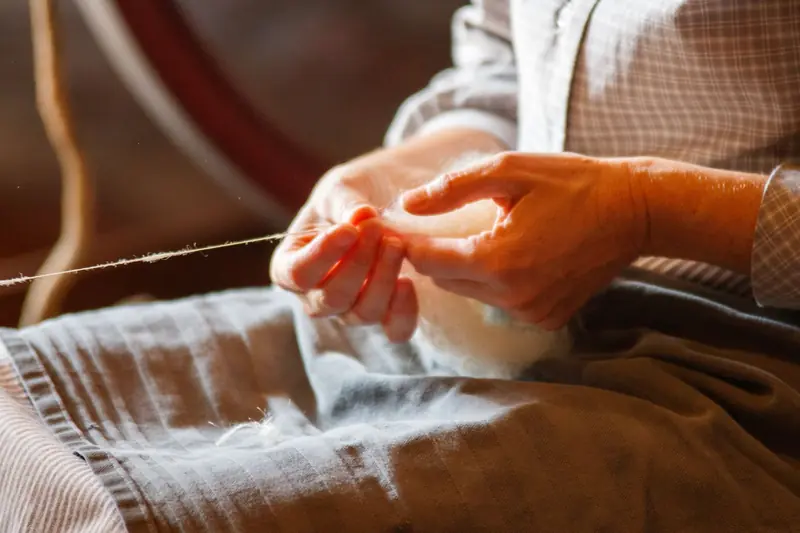
Needle felting needs two things. The wool fibers must have scales, and the barbs on the needle must catch those fibers and push them into the mass, where they tangle and lock. If either half is missing, nothing firms up. So the checks below run in that order: the fiber first, then how it was prepared, then how much you are working and how it was rolled, then the needle. The first row of the table that matches what you see is the place to start.
Wool not felting: what you see and what to do
The rows follow the order of the checks, fiber first. A single piece can have two causes at once, for example fine top rolled loosely, so read past the first match.
| What you see | Likely cause | What to do |
|---|---|---|
| Fiber tangles a little, stays springy and pulls apart with a tug | Superwash wool, acrylic or cotton | Read the label. Change to non-superwash wool sold for felting. |
| Smooth, shiny wool slides around and long strands lift off | Combed top (often labeled roving): long parallel fibers | Use thin wisps and cross the layers, or build with carded batting. |
| A big puffy piece hardly shrinks | Too much wool at once | Split it. Add wool in small amounts and thin layers. |
| The outside firms up, the middle stays soft and squashy | Rolled too loosely, or stabs too shallow | Re-roll as tightly as possible. Stab deeper with a size 36 or 38. |
| Progress is very slow on a core or on coarse wool | A size 40 or 42 needle doing bulk work | Change to a size 36 or 38 until the piece holds its shape. |
| Wool that used to felt now barely reacts | Worn needle | Try a new needle of the same size on the same wool. |
Can you use any wool for felting?
No. Felting depends on the scales that cover a wool fiber. Superwash wool has had its scales removed or coated so the yarn can go in a washing machine, and it will not felt. Acrylic and cotton have no scales at all. A barbed needle tangles all three a little, which is why they seem to start felting and then never get firm.
The label usually tells you before you stab. For a named yarn, including the popular roving-style yarns, do not rely on the name or the look. Read the fiber content and the care symbols on the band of the ball in your hand.
- The word superwash, or wording such as machine washable on a wool yarn: treat it as wool that will not felt.
- Acrylic, polyester, nylon or cotton in the fiber content: the higher the share, the less the fiber will hold.
- Hand wash only on a 100 percent wool label is a good sign. Plain wool is labeled that way because it felts in a machine.
- No label at all, as with unmarked craft fiber: use the needle test in the next section.
How to tell feltable wool from superwash or acrylic
When the label is missing or unclear, a small sample answers the question. Pull off a small tuft, fluff it, and roll it into a loose ball between your fingers. Stab it on the pad with a size 38 needle (38 gauge), turning it as you go.
Wool that felts gets visibly smaller and denser early on, and it holds together when you tug at it. Superwash wool, acrylic and cotton stay springy. The tuft keeps its volume, and a gentle pull separates it back into loose fibers. Test with a needle you know is good, or the result tells you about the needle and not the wool.
Note.A tuft that fails the test will not be rescued by more stabbing. It can still serve as surface detail on a wool base: see the fiber table for yarn, acrylic and cotton.
Combed top that slides instead of locking
Combed top, sold as roving in many US stores, has long fibers that all run the same way. They slide along each other before they lock, so top is slower to felt than carded wool, and fine merino top is slower again. This is real felting wool behaving normally. It needs different handling.
Pull off thin wisps instead of thick lengths. Lay each new wisp across the one below, so the fibers cross. For a core, tear the top into short pieces and mix them up before rolling, which breaks up the parallel lines. Better still, keep top for the surface and build the shape from carded wool. The row-by-row comparison is in wool batting vs roving.
Too much wool at once, or rolled too loosely
A needle moves only the few fibers its barbs catch on each stab. In a big, airy handful those fibers have nowhere firm to lock into, and the piece stays puffy. Start smaller than seems right. Roll the wool as tightly as possible, hold the roll closed, and stab while turning it. Add more wool in thin layers once the center holds.
Depth matters as well. Shallow stabs felt the surface and leave the middle loose. For a core, the working end of the needle has to travel into the center of the piece, straight in and straight out. The core is done when it is firm and holds its shape when squeezed: how firm needle felting should be describes that test.
Is the needle worn, or the wrong size?
Size first. A size 40 or 42 needle has small barbs made for detail and surface work. On core wool and coarse fibers it carries very little and the work crawls. Build with a size 36 or 38 and move to finer sizes later. The felting needle size chart shows which size suits which job and which wool.
Then wear. Barbs dull with use, and a worn needle goes in and out without taking much fiber with it. There is no reliable published figure for how long a needle lasts, so compare instead: stab the same wool with a new needle of the same size. If the new one grabs and the old one does not, retire the old one. A sewing needle or pin has no barbs and will not felt at all.
How to keep wool felting from the first stab
These problems are largely settled before the needle touches the wool, by what you buy and by how you start the piece. Five habits cover them.
- Buy wool sold for felting: core wool for the inside and a medium carded batting for shaping. The chart of wool types shows which does what.
- Test a tuft of any yarn or unlabeled fiber before you plan a project around it.
- Start with a small, tightly rolled core and add wool in thin layers.
- Work from coarse to fine: size 36, then 38, then 40 or 42.
- Keep one new needle of each size aside as a comparison for worn ones.
When the problem is wet felting instead
Everything above is about needle felting, where a barbed needle tangles the fibers. Wet felting works differently: hot soapy water, friction and time do the tangling, and the usual failures are a little different. Superwash wool and plastic-based fibers still will not felt, but a layout that is too thick, layers laid all in one direction or water that is too cool can also stop a piece from holding together. If your wool refuses to felt in a bowl of soapy water rather than under a needle, the step-by-step checks in why is my wet felting not working cover the fiber, the layout, the soap and the timing of the rolling stage.
Quick answers
Short answers to the fiber questions behind most cases of needle felting that is not working. The label and a test tuft answer each one.
- Why is my needle felting not working? The usual causes are a fiber that cannot felt, such as superwash wool or acrylic, or too much loosely rolled wool.
- Can you felt wool blends? Wool blended with other animal fiber felts. Blends with synthetic or plant fiber hold less well the lower the wool share.
- Can you felt a wool acrylic blend? Partly. The wool in it can lock and the acrylic cannot, so the result is looser than pure wool. Test a tuft first.
- Is Wool-Ease Roving Origins superwash? Check the band on your ball: fiber content and care symbols. If it says superwash or machine washable, it will not felt.
What you need for this
- See price on AmazonAmazon
The Felt Box carded batts, bright shades, 100 g
- See price on AmazonAmazon
Desert Breeze Corriedale core wool, 8 oz
From Best Core Wool for Needle Felting: What to Buy and How Much
- See price on AmazonAmazon
Desert Breeze German needles, 36/38/40, 15 pieces