Explainer
Can You Needle Felt With Yarn, Acrylic or Cotton?
Published
Short answer
Yes, if the yarn is non-superwash wool or another animal fiber: untwist it, brush it out and it felts like roving. Acrylic and cotton have no scales. A barbed needle tangles them a little and can anchor them into a wool base, but they do not felt firm and will not wet felt. Superwash wool has its scales removed or coated and will not felt.
This page is for a yarn stash and no roving. The fiber decides the answer, not the brand or the thickness of the yarn, so start with the band: fiber content and care symbols. Felting needs a fiber with scales. The barbs of a felting needle push fibers into the mass, and the scales are what make them lock and stay there. The table goes fiber by fiber. After it come the two ways to put yarn to work: pulled apart and used as loose fiber, or laid on a wool base as lines and small details.
Can you needle felt with yarn? It depends on the fiber
Find the fiber content on the yarn band and read across. For blends, the row that counts is the share of plain, non-superwash wool.
| Yarn fiber | Does it needle felt? | How well it holds | How to use it |
|---|---|---|---|
| Non-superwash wool | Yes | Firm, like roving once it is brushed out | Unply and brush out as fiber, or lay on as lines |
| Other animal fiber (alpaca, mohair) | Yes | Holds on a wool base | Surface details and texture |
| Superwash wool | No | Tangles loosely, never firm | Treat it like acrylic |
| Acrylic | No, it only tangles a little | Not firm, pulls apart | Thin lines and details anchored into a wool base |
| Cotton | No, it only tangles a little | Not firm, pulls apart | Stitch it on, or anchor thin lines into wool |
| Wool blended with acrylic or nylon | Partly | Looser than pure wool | Test a strand first, use for details |
Can you needle felt with acrylic yarn?
Not into a firm shape. Acrylic is a smooth synthetic fiber with no scales. The barbs still catch it and push it down, so a pile of acrylic tangles a little under the needle and may look as if it has started to felt. It stays springy, and a tug pulls it apart. More stabbing does not change that, and it will not wet felt either.
What acrylic can do is ride on wool. Laid on a firm wool base and stabbed, acrylic strands are pushed in among wool fibers that lock around them. That is enough for a line or a spot of color on a piece that will sit on a shelf. It is not enough for a core, for a limb, or for anything that gets handled.
A blend follows its wool share. One published test joined the ends of an 80 percent acrylic, 20 percent wool yarn with a felting needle, while pure acrylic and pure cotton ends did not hold. That is a small join, not a sculpture, so test a strand of any blend before you count on it.
Can you needle felt cotton or superwash wool?
Cotton behaves like acrylic. It is a plant fiber with no scales, so it tangles a little and never firms up. Cotton is useful under the needle in another role: as the fabric you felt wool onto. Muslin, calico and denim all take wool well, and the chart on needle felting onto fabric lists which fabrics work.
Superwash wool is real wool that has been treated so it can be machine washed. Its scales are removed in an acid bath or coated with a polymer, and without working scales it will not felt. One published crochet tutorial did join two superwash yarn ends with a felting needle, which shows the same loose tangling that acrylic gives. Do not plan a sculpture around it.
How to turn wool yarn into felting fiber
Yarn is fiber that has been twisted, and the twist is what gets in the way. Take it out and plain wool yarn becomes a small supply of loose wool. This suits patches of color and small parts. For a whole core it is slow going, and core wool does that job faster.
- 1
Check the band: the yarn should be 100 percent wool, or mostly wool, with no superwash or machine wash wording.
- 2
Cut the yarn into short lengths, about as long as a finger. Short pieces untwist easily and the fibers end up lying in more than 1 direction.
- 3
Untwist each piece and pull the plies apart. A 4-ply yarn gives 4 thin strands, and each strand opens up further when you roll it backward between your fingers.
- 4
Brush the strands out with a pet brush or a pair of hand carders until no twisted bits remain and you have a fluffy tuft.
- 5
Felt the tuft as you would any carded wool: thin layers, a size 38 needle (38 gauge) for shaping, a size 40 for the surface.
Yarn as lines and details on a wool base
The second method leaves the yarn whole. Lay a strand on a firm wool base and stab along its length with a size 40 needle, straight in and straight out, until it sits in the surface. This gives clean lines for mouths, whiskers, stripes and lettering. Thin yarn works better than thick: split a plied yarn and use a single strand.
Wool and other animal fiber yarns lock into the base. Acrylic and cotton strands are only held by the wool around them, so keep them short and stab them in well. The same method adds faces to crocheted and knitted pieces, covered in needle felting on crochet and knits.
Note.On crochet and knits the base matters too: felted details and yarn ends hold on wool and other animal fiber yarn, not on acrylic.
Can you use roving yarn for felting?
Roving yarn is a thick, single strand with very little twist, so it pulls apart into loose fiber more easily than any plied yarn. Whether it felts still depends on the band. Plain wool roving yarn felts. Roving yarn that is acrylic, superwash wool or a blend with little wool in it does not, however much it looks like felting wool. The label check and a short needle test on a tuft are described in why is my wool not felting.
Needle felting without wool: what else works
Other animal fibers felt, because they have scales too. Alpaca and mohair are two that yarn felting guides name. Pet hair belongs here as well: the soft undercoat of double-coated dogs felts, while short, slippery coats need wool to hold them. Blend it with wool or lay it as a thin layer over a firm wool core, as explained in needle felting with cat or dog hair. Plant and synthetic fibers do not felt alone.
Quick answers
The short version for each fiber. In every case the yarn band, with its fiber content and care symbols, settles the question.
- Can you needle felt with yarn? Yes, if it is non-superwash wool or another animal fiber. Unply it and brush it out, or lay strands on a wool base.
- Can you needle felt with cotton? Not into a firm shape. Cotton has no scales. It works as a fabric to felt wool onto, not as the felting fiber.
- Can you use roving yarn for felting? Only if the band says plain, non-superwash wool. Acrylic roving yarn tangles a little and does not felt.
- Is needle felting without wool possible? With other animal fibers such as alpaca, mohair or soft dog undercoat, yes. With acrylic or cotton alone, no.
What you need for this
 See price on AmazonAmazon
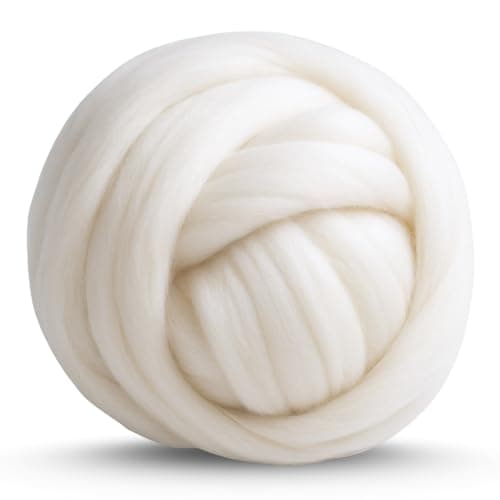
Revolution Fibers merino roving, undyed, 1 lb
From Best Wool Roving for Needle Felting: Color Sets and Bulk Packs
 See price on AmazonAmazon
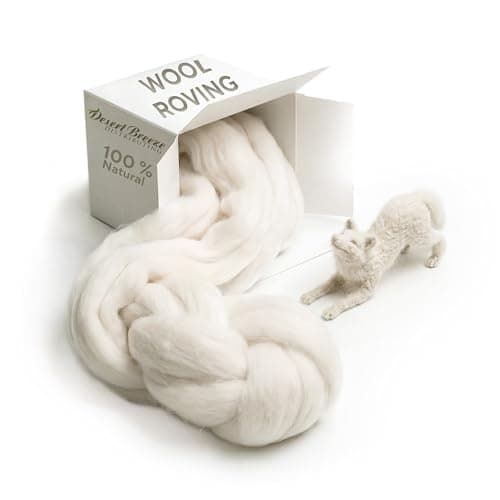
Desert Breeze Corriedale core wool, 8 oz
From Best Core Wool for Needle Felting: What to Buy and How Much
 See price on AmazonAmazon
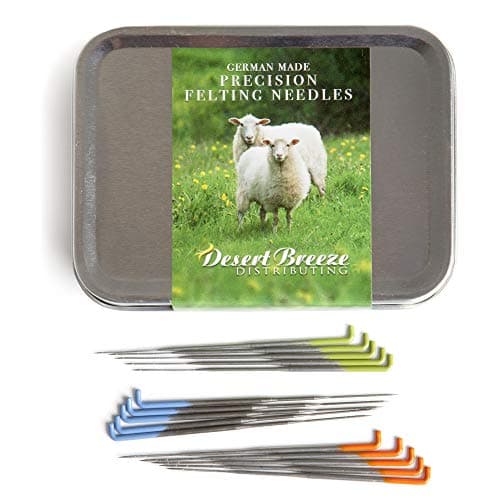
Desert Breeze German needles, 36/38/40, 15 pieces