Explainer
Can You Felt Without a Felting Needle? Substitutes That Work
Published
Short answer
Not with a needle from the sewing box. A felting needle works because barbs on its working end catch wool fibers and push them into the mass. A sewing needle is smooth, so it slides between the fibers and nothing locks. Without a felting needle, wool can still be felted wet: 2 to 4 thin layers, soap and water as hot as your hands can take.
This page is for someone who has wool on the table and no felting needle, or who wonders if the needle is worth buying. Two things decide the answer: what you want to make and what the fiber is. Flat felt, bowls and simple balls can be made by hand with water and soap. A sculpted animal with attached legs and a small face needs the barbed needle, and nothing in a household drawer copies it. Superwash wool and acrylic will not felt by either method.
Felting needle vs sewing needle: what is the difference?
The two tools share a name and a sharp point, and little else. The row that matters in the table is the first one: barbs. Wool fibers are covered in scales, and felt forms when the fibers are tangled so tightly that they lock together. The barbs do the tangling. Each stab carries a few fibers down into the wool and leaves them there.
| Feature | Felting needle | Sewing needle |
|---|---|---|
| Working end | Barbs (small notches) cut into the edges | Smooth all the way to the point |
| Shape of the working end | Triangle, star or twisted triangle | Round on ordinary sewing needles |
| Top end | A bent crank, no eye | An eye for thread |
| What it does in wool | Catches fibers on the way in and pushes them into the mass | Slides between the fibers and leaves them where they were |
| Sizes | 32 to 42 for hand felting, and higher means finer | Its own size system, unrelated to felting sizes |
| How it is used | Stabbed straight in and straight out, over and over | Pulled through fabric with thread behind it |
| Result on loose wool | Firm felt that holds its shape | Loose wool that still pulls apart |
Can you use any needle for felting?
No. Any needle without barbs is a smooth spike. A sewing needle, a darning needle, a pin, a toothpick and a skewer all pass between the fibers and carry nothing with them. You can stab loose wool with one for an hour and it will still pull apart in your fingers. That is also the answer to 'what to use instead of a felting needle': there is no household substitute for the barbs.
Scratching notches into a sewing needle is not a fix. A felting needle is a precision part: makers cut a set number of small barbs into each edge, for example 2 per edge on the Groz-Beckert twisted needle. The felting needle size chart shows how size and barb count change what a needle does.
How to felt without a felting needle: wet felting
Wet felting uses water, soap and rubbing where needle felting uses barbs. Your hands supply the agitation that tangles the fibers into a sheet. No needle is involved at any point. For a first flat piece you need wool (merino is the usual choice), soap, hot water, a towel and a sheet of bubble wrap or plastic to work on.
- 1
Pull thin wisps from the wool and lay them side by side in a square of about 10 x 10 in. Lay the next layer at a right angle to the first. Build 2 to 4 thin layers.
- 2
Wet the wool with soapy water as hot as your hands can take. Some guides give about 140 F (60 C). Olive oil soap is the usual choice because it lathers little and is gentle on hands.
- 3
Press the air out, then rub the surface with flat, soapy hands. Start lightly so the layers do not shift, and turn the piece over to work both sides.
- 4
Do the pinch test: pinch the surface and lift. If single fibers come up, keep rubbing. If the fabric lifts as one piece, the felt has formed and you can start fulling.
- 5
Full the piece: roll, squeeze and rub it harder so it shrinks and firms up. Expect each side to end 20 to 50 percent smaller than the layout.
- 6
Rinse until the water runs clear, pull the piece into shape and let it air dry. Direct heat shrinks it further.
Note.Because wet felt shrinks 20 to 50 percent per side, lay the wool out larger than the piece you want. Layout size = finished size / (1 - shrinkage).
What you can make without a needle, and what you cannot
Wet felting is a different craft with different results, not a slower route to the same piece. It is strong at sheets and hollow forms and weak at small, exact placement. The table sorts common projects by method.
Hollow shapes are felted around a flat template called a resist. Wet felting resist material compares the options, and what soap to use for wet felting covers the soap.
| Project | Without a felting needle? | Why |
|---|---|---|
| Flat sheet, coaster, picture background | Yes, wet felted | Layers of wool felt into one sheet under soapy hands |
| Bowl, pouch, slippers | Yes, wet felted over a resist | Resist: thin foam underlay 2 to 3 mm, bubble wrap or plastic sheet |
| Simple ball or bead | Yes, rolled in soapy hands | Good for round shapes, not for detail |
| Sculpted animal with attached parts | No | Joining dry parts means stabbing loose fibers into the body with a coarse needle |
| Faces, spots, thin lines of color | No | Small features are placed with a size 40 or 42 needle |
Do you need a felting needle for needle felting?
Yes. For sculpted work the needle is the craft: 'needle felting' and 'dry felting' both mean stabbing wool with a barbed needle. Needles are among the lowest-cost items on the supply list and are sold in packs, because they are brittle and snap. A useful first set has three sizes: a size 38 (38 gauge) star as the all-rounder, a size 40 triangle for finishing and a size 36 for core work.
The needle also needs something to stab into. Work on a foam pad or a wool mat, never on a bare table or your lap. What you need for needle felting lists the full starter set.
Note.Felting needles are barbed and very sharp. Watch the needle, keep fingers out of its path and use finger guards. Children felt only with adult supervision.
Wool that will not felt with or without a needle
If the plan is to skip the needle because the wool did not felt, check the fiber first. Superwash wool has had its scales removed or coated so it survives the washing machine, and it will not felt wet or dry. Acrylic and cotton have no scales. A barbed needle tangles them a little, but they never felt firm, and they do not wet felt at all. Plain, untreated wool is the requirement for both methods. Why wool is not felting goes through the causes in order.
Quick answers
Short answers to the searches that lead to this page. The reasons and the numbers are in the sections above, and the sources are listed below.
- Can you use any needle for felting? No. Only a barbed felting needle tangles wool. Sewing needles, pins and darning needles are smooth and do not felt.
- What to use instead of a felting needle? Nothing from the sewing box. The working alternative is wet felting: soap, hot water and rubbing by hand.
- Felting needle vs regular needle: what is the difference? A felting needle has barbs on a triangle or star shaped working end and no eye. A regular needle is smooth and has an eye for thread.
- How to needle felt without a felting needle? You cannot. Needle felting means stabbing wool with a barbed needle. Without one, wet felt the piece or buy a needle.
- Do you need a felting needle? For sculpted figures and small details, yes. For flat felt, bowls and simple balls, wet felting needs no needle at all.
What you need for this
 See price on AmazonAmazon
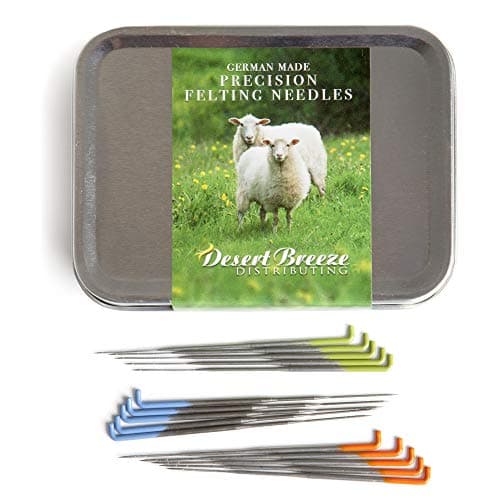
Desert Breeze German needles, 36/38/40, 15 pieces
 See price on AmazonAmazon
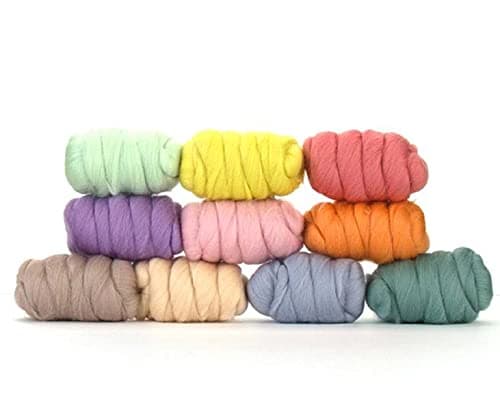
Revolution Fibers merino variety pack, 250 g
From Best Wool for Wet Felting: Merino Roving and Other Options
 See price on AmazonAmazon
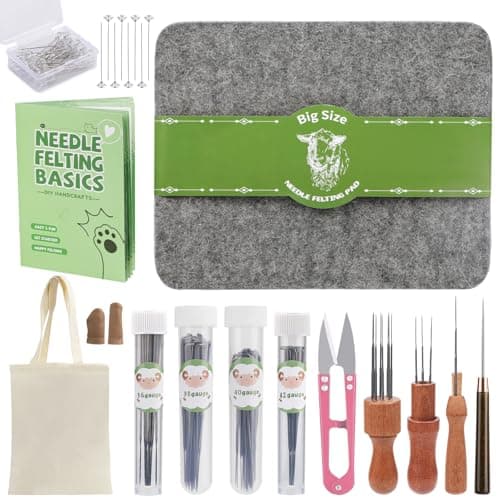
IMZAY tool kit, 90 needles and 8 x 10 in wool mat
From Best Needle Felting Starter Kits: What Is Actually in the Box