Explainer
How Long Does Needle Felting Take?
Published
Short answer
For a beginner, a wool ball takes about 20 to 40 minutes, a small flat design 30 to 60 minutes and a small animal 2 to 4 hours. A detailed or posable figure takes longer, and no reliable figure exists for it. The time depends on the wool, the needle size, the size of the piece and how much practice you have.
Needle felting is slow by design. Each stab moves a few fibers, and a firm shape takes a great many stabs, so the time question is fair to ask before buying a kit. The ranges on this page are one maker's published estimates for beginners and small pieces, not measured times, and your first piece may fall outside them. One thing works in your favor: dry felting has nothing that dries or sets, so a piece can be put down at any point and picked up again another day.
How long does needle felting take, by project?
The table gives beginner ranges for small projects. Read each range as time spent stabbing, in one sitting or spread over several. Size matters more than the subject: a figure twice as tall has far more wool to firm up.
| Project | Beginner time | Where the time goes |
|---|---|---|
| Wool ball | 20 to 40 minutes | Rolling tight, then firming evenly all the way round |
| Small flat design | 30 to 60 minutes | Filling the shape and tidying the edges |
| Mini shape such as a mushroom or heart | 45 to 90 minutes | Shaping the form and its details |
| Small animal | 2 to 4 hours | Core, attaching parts, color layer, face |
| Detailed or posable figure | Longer; no reliable figure | Armature, many parts, fine surface work |
What decides how long a piece takes
Four things set the pace: the wool, the needle, the size of the piece and your practice. The first two are choices you make before the first stab, so they are the easiest to get right.
- Wool type: carded wool, with short fibers lying in all directions, felts fast. Combed top, often sold as roving, is slower. See batting vs roving.
- Needle size: a coarse size 36 moves a lot of wool per stab. A fine size 40 or 42 moves little and is meant for the surface.
- Project size: more wool means more stabs. A second color layer, a face and attached parts each add time.
- Practice: beginners take longer. Rolling tighter and stabbing evenly are habits that shorten every later piece.
Does needle felting take a long time?
For small pieces, no: a ball or a flat shape fits into an evening. Sculpted animals are where the hours go, and a good share of them goes into the part nobody sees. The core has to be stabbed until it is firm before any color goes on, and a core that is rushed shows later as a soft, fuzzy figure.
So is needle felting time consuming? Compared with crafts that have a drying or curing step, the time is all active work, with no waiting. It is also easy to split up. Stop when your hand tires and carry on later, and judge progress by the squeeze test in how firm needle felting should be, not by the clock.
What speeds needle felting up
The gains come from the materials and the order of work, and they add up over a whole figure. None of them involve stabbing harder or faster.
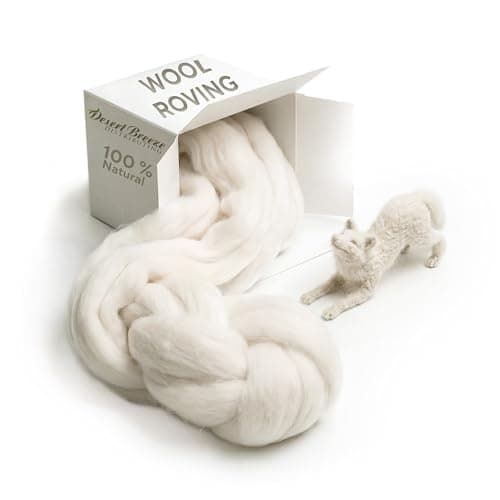
- Use core wool inside. It is coarse or blended carded wool that felts down quickly: see core wool.
- Roll the wool as tightly as possible before the first stab. Loosely rolled wool takes far longer to firm up.
- Start with a coarse needle. Build with a size 36, firm with a 38, and bring out the 40 only for the surface.
- Choose a star needle for bulk work. It has 4 barbed edges and felts faster than a triangle of the same size.
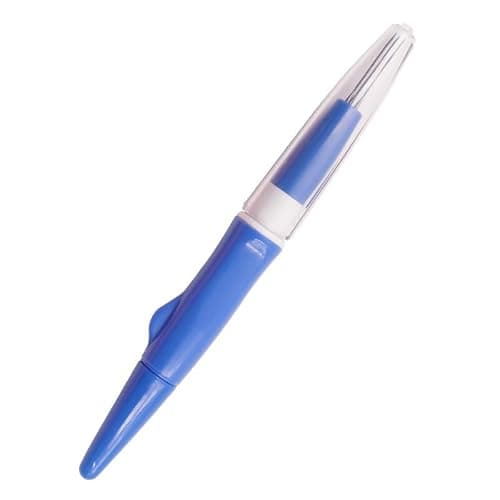
- Use a multi-needle tool on larger areas. A felting pen such as the Clover pen tool holds 1, 2 or 3 needles: 3 for speed, 1 for delicate work.
- Add wool in thin layers. Too much wool at once is slow to lock and felts unevenly.
What does not save time
Some shortcuts cost more time than they save. Stabbing harder, prying or changing angle mid-stab bends and snaps needles. Using a fine needle for core work is slow and breaks the needle under load. Forcing a needle into felt that is already dense does the same: change to a finer size instead.
Skipping the firm core is the other false saving. Color laid over a soft core sinks in unevenly and stays fuzzy, and the repair takes longer than the firming would have.
Is needle felting hard or easy to learn?
The basic technique is easy. There is one motion to learn, a stab straight in and straight out, and supplier guides describe the craft as beginner friendly. One of them notes that most beginners make something recognizable in their first session.
What takes practice is the finish: even firmness, a symmetrical shape, a smooth surface and a face with character. No verified figure exists for how long that takes, and it improves piece by piece. The other thing to respect is the tool. Felting needles are barbed and very sharp, so watch the needle, keep fingers out of its path and use finger guards.
A first project that fits one sitting
To find out whether the craft suits you, pick a project from the top of the table. A ball teaches rolling, turning and judging firmness, and it is a common starting shape for animals: follow how to needle felt a ball. A small flat design made inside a cookie cutter or mold is the other short option. Leave the small animal for the second or third session, when the squeeze test already feels familiar.
Quick answers
Short answers on time and difficulty. The ranges are one maker's published beginner estimates for small pieces, not guarantees.
- Does needle felting take a long time? Small pieces do not: a ball takes 20 to 40 minutes. A small animal takes 2 to 4 hours for a beginner.
- Is needle felting time consuming? The time is all active stabbing, with no drying or waiting, and a piece can be stopped and resumed at any point.
- How long does it take to learn needle felting? The basic stab is learned in the first session. A neat, smooth finish takes practice, and no verified figure exists for it.
- Is needle felting hard? The technique is simple. Even firmness, symmetry and faces are the parts that take practice.
- Is needle felting easy for beginners? Yes. Supplier guides call it beginner friendly, and a first ball or flat shape fits one sitting.
What you need for this
 See price on AmazonAmazon
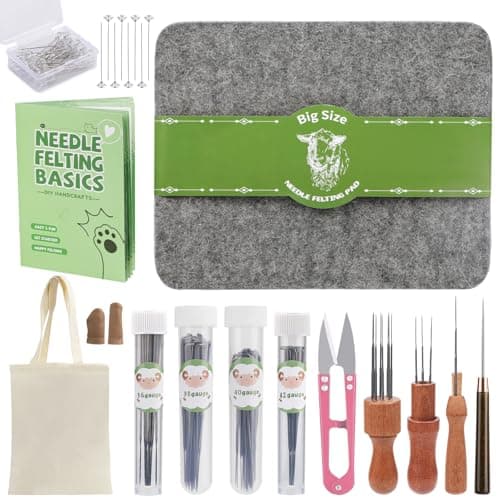
IMZAY tool kit, 90 needles and 8 x 10 in wool mat
From Best Needle Felting Starter Kits: What Is Actually in the Box
 See price on AmazonAmazon
Catopia triple needle pen with 10 refill needles
From Best Felting Pens: Pen Style and Punch Style Needle Tools
 See price on AmazonAmazon
Desert Breeze Corriedale core wool, 8 oz
From Best Core Wool for Needle Felting: What to Buy and How Much
 See price on AmazonAmazon
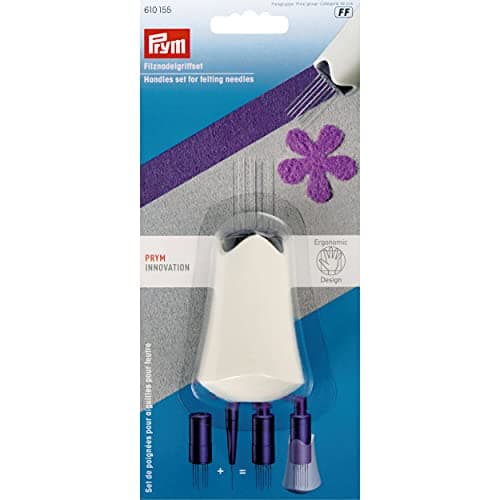
Prym ergonomic handle set, 7-slot and 1-slot
From Best Felting Needle Holders: Single, 3-Needle and Multi-Needle