Chart
Can You Needle Felt Onto Any Fabric? A Fabric-by-Fabric Chart
Published Updated
As an Amazon Associate we earn from qualifying purchases. This does not change our picks. Affiliate disclosure
New to Prime? Try Prime free for fast, free shipping on eligible items.
Short answer
Almost. Any fabric a felting needle passes through can take wool, but the hold differs. Wool felt at least 1 mm thick is the easiest base. Linen, cotton muslin, calico, denim and close-weave burlap also work well. Thin quilting cotton puckers. Canvas, stretch knits and synthetics have no published rating: test a hidden corner first.
Gear for this job
All 7 picks comparedDesert Breeze German needles, 36/38/40, 15 pieces
See price on AmazonSee it on AmazonGroz-Beckert sample set, 36/38/40, 6 needles
See price on AmazonSee it on AmazonYizzvb 80 needles, 36/38/40/42, 20 per size
See price on AmazonSee it on Amazon
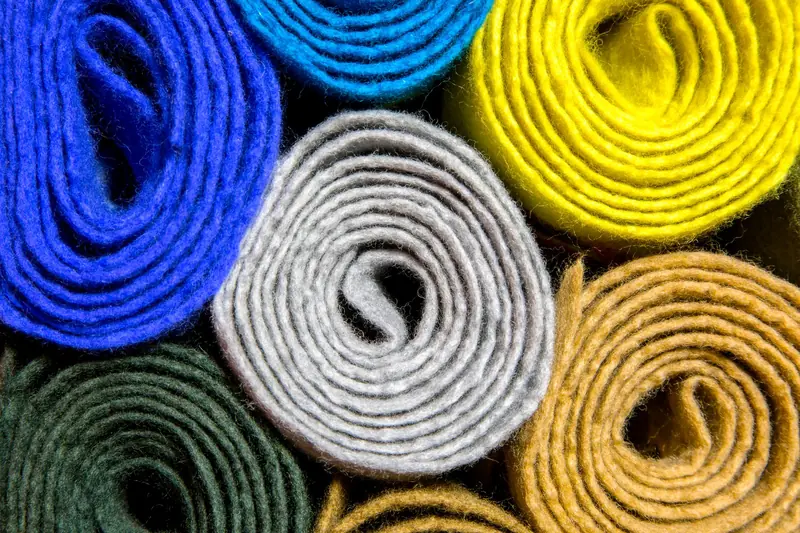
This page is for a felted design on a sweater, a pair of jeans, a tote bag or a picture in a hoop. Three things decide the result: what the fabric is made of, how close the weave is and how thick it is. Wool fabric locks with the wool you add. Every other fabric only traps the fibers that the needle pushes through its weave. The chart rates 11 fabrics. Rows marked 'test first' are fabrics the supplier guides read for this page do not cover, so no rating is given for them.
Needle felting on fabric: the fabric-by-fabric chart
Find your fabric in the first column. 'Anchors' means how well the added wool stays in once it has been stabbed through. A row marked test first is not a no. It means no supplier rating was found, so try a hidden corner or a scrap before the real piece.
| Fabric | How well wool anchors | Puckering risk | What it suits |
|---|---|---|---|
| Wool felt, 1 mm or thicker | Best: firm, stable and easy to felt onto | Low | Pictures, hoop art, patches, clean edges and small details |
| Pre-felt (partly felted wool) | Very easy to felt into | Some: soft and slightly stretchy | Landscapes and textured backgrounds |
| Wool knit (sweater) | Test first: wool yarn can lock with the added wool | Test first: knits stretch | Motifs on sweaters and hats |
| Linen | Good | Low: does not stretch much as you work | Detailed pictures and portraits |
| Cotton muslin and calico | Good: a firm, plain-woven surface | Low: does not stretch much as you work | Pictures, landscapes, practice pieces |
| Thin quilting cotton | Holds, but the fabric is thin | High: it puckers | Small, light motifs only |
| Canvas | Test first: no supplier rating found | Test first | Tote bags, if the needle passes through without force |
| Denim | Good | Heavy denim: low. Stretch denim: test first | Jeans, jackets, patches |
| Burlap (hessian) | Good if the weave is close and fine | Depends on the weave | Rustic pictures, larger textured pieces |
| Stretch knits (T-shirt jersey) | Test first | Test first: keep the fabric relaxed, never stretched | Small motifs, after a test on a hem |
| Synthetics (fleece, polyester, acrylic felt) | Test first: the fabric itself does not felt | Test first | Decorative pieces that are not handled much |
Can you needle felt onto any fabric? What decides the hold
The barbs of a felting needle push wool fibers down through the fabric. On wool felt or a wool knit, the base has scaled fibers of its own and the new wool locks with them. Cotton, linen and synthetics cannot felt. On those the wool holds only because its fibers are pushed through the weave and tangle with each other on the back.
That is why weave and thickness matter. A close weave gives the fibers more to grip, and a very open weave makes small details hard to place. A thin fabric puckers under a dense design. For pictures, one felting supplier suggests wool felt 1 to 1.2 mm thick with at least 30 percent wool in it.
How to needle felt on fabric: 7 steps on a pad
You need the fabric, a little wool, a size 38 and a size 40 needle, and a pad. A foam pad 1.5 to 2 in thick works, and a brush mat is made for flat work on fabric. The mat comparison covers both.
- 1
Test first. Felt a wisp of wool onto a scrap or a hidden spot such as an inside hem. Check the front for puckers and the back for wool fibers showing through.
- 2
Lay the fabric flat on the pad, right side up. On clothes and bags, slide the pad inside so the needle passes through 1 layer only.
- 3
Mark the design. Carbon transfer paper works on calico, linen and thin wool felt. For a simple shape, set a cookie cutter on the fabric and fill it with wool.
- 4
Pull off a thin wisp of wool, thin enough to nearly see through, and lay it inside the outline. Several thin layers anchor better than 1 thick pad of wool.
- 5
Tack the wisp with a size 38 needle (38 gauge). Stab straight in and straight out, just deep enough for the barbs to pass through the fabric into the pad.
- 6
Lift the fabric off the pad after every few rows of stabs so the wool does not felt into the pad. If the fabric has shifted or distorted, lay it flat again before you go on.
- 7
Add thin layers until the color is even. Then go over the surface with a size 40 needle and shallow stabs to close the holes and tidy the edge.
How to tell the wool is anchored
Turn the fabric over. Wool fibers should show on the back across the whole design, as an even fuzz in the color of the wool. Bare patches on the back mark wool that is only lying on the surface, so go over those areas again. On the front, the edge of the design should not lift when you run a fingertip against it, and a gentle tug should not pull the wool away. The fabric around the design should lie flat. Puckers usually mean the fabric is too thin for the amount of wool, or that it was stretched while you worked.
Needle felting on clothes, denim and sweaters
Clothes add two conditions: there is a second layer of fabric behind the first, and the piece will be worn. Put the pad inside the sleeve, leg or body so you never stab through both layers. Denim takes wool well. On a wool sweater the design goes onto yarn that can itself felt, the same principle as felting details onto crochet and knits. Knits stretch, so leave the fabric relaxed on the pad and do not pull it tight.
Washing is the open question. No supplier guide read for this page says how a needle felted design holds up in the wash, so nothing is claimed here. Treat the design as hand wash. Hot water and rubbing are what felt and shrink wool, so expect them to change the design.
Note.For anything that will be worn and washed, make a test patch on the same fabric and wash that first. Nothing on this page promises that a felted design survives a machine wash.
Can you needle felt on canvas or cotton?
Cotton, yes. Muslin and calico are standard bases for wool pictures: firm, plain and widely sold. Thin quilting cotton is the exception, because it puckers. Canvas is a heavy, tightly woven cloth, and the supplier guide behind the chart does not rate it, so its row says test first.
The test is simple: the needle should pass through without force. Forcing a needle through dense material is one of the standard reasons felting needles break. If the needle goes through cleanly and wool fibers show on the back, the canvas works. If you have to push, change to a finer needle or pick another fabric.
How to needle felt a flat picture in an embroidery hoop
A flat wool picture is built the same way as a motif: thin layers, background first, small details last with a size 40 or 42 needle. The needle size chart lists each size by job. Wool felt, calico and linen are the usual bases. Keep the fabric flat on the mat while you work, above all in detailed areas.
A hoop is a simple way to finish a smaller picture. One felting teacher recommends wool felt for hooped pictures because it can be pulled firmly into the hoop without easily distorting the design. If you felt with the fabric already in the hoop, lay the hoop so the fabric rests directly on the pad, and keep the needle away from the hoop itself. More flat projects are on the flat work and fabric page.
Which one to pick
For a base fabric, the wool felt sheets guide compares felt and prefelt by wool content, thickness and size, which suits pictures and hoop art. If you are working on a pad, the foam pad guide compares sizes and thicknesses. The felting needles guide suits anyone who still needs the size 38 and 40 needles used in the steps above.
Quick answers
Short answers to the searches behind this page. 'Test first' means no supplier rating was found, not that the fabric fails.
- Can you needle felt onto cotton? Yes. Muslin and calico work well. Thin quilting cotton puckers, so keep designs on it small and light.
- Does needle felting on denim work? Yes, denim takes wool well. Put the pad inside the leg or sleeve so you stab through 1 layer only.
- Can you do needle felting on canvas? Test first. If the needle passes through without force and fibers show on the back, it works.
- Can needle felting on clothes be washed? That could not be verified. Treat the design as hand wash and wash a test patch on the same fabric first.
- Do you need an embroidery hoop for needle felting? No. Felt with the fabric flat on a pad. A hoop is a simple way to display a smaller picture.
Use this chart
Print it, save the image version, or put it on your own site or forum post with the code below. The code keeps a link back to this page as the source.
Embed code
<a href="https://woolsculpt.com/blog/needle-felting-on-fabric"><img src="https://woolsculpt.com/charts/needle-felting-on-fabric/image.png" alt="Can You Needle Felt Onto Any Fabric? A Fabric-by-Fabric Chart" width="600" loading="lazy"></a>
<p>Source: <a href="https://woolsculpt.com/blog/needle-felting-on-fabric">Can You Needle Felt Onto Any Fabric? A Fabric-by-Fabric Chart</a>, Wool Sculpt</p>
What you need for this
- See price on AmazonAmazon
Desert Breeze German needles, 36/38/40, 15 pieces
- See price on AmazonAmazon
Revolution Fibers merino roving, undyed, 1 lb
From Best Wool Roving for Needle Felting: Color Sets and Bulk Packs
- See price on AmazonAmazon
Mybecca Needle Felting Foam Pad, 12x12x2 in
From Best Needle Felting Foam Pads: Density, Thickness and Size
- See price on AmazonAmazon
Hyamass Felting Mold Stencils, 16 Pieces
From Best Needle Felting Molds and Cookie Cutters for Flat Shapes